Excellent Posture is
Foundational to Your Vitality
Let’s explore how to achieve excellent posture, avoid pitfalls
of modern living, and build easy habits for lasting vitality.
Why Posture Matters: Gravity is Automatic and it’s constant pull can create imbalance
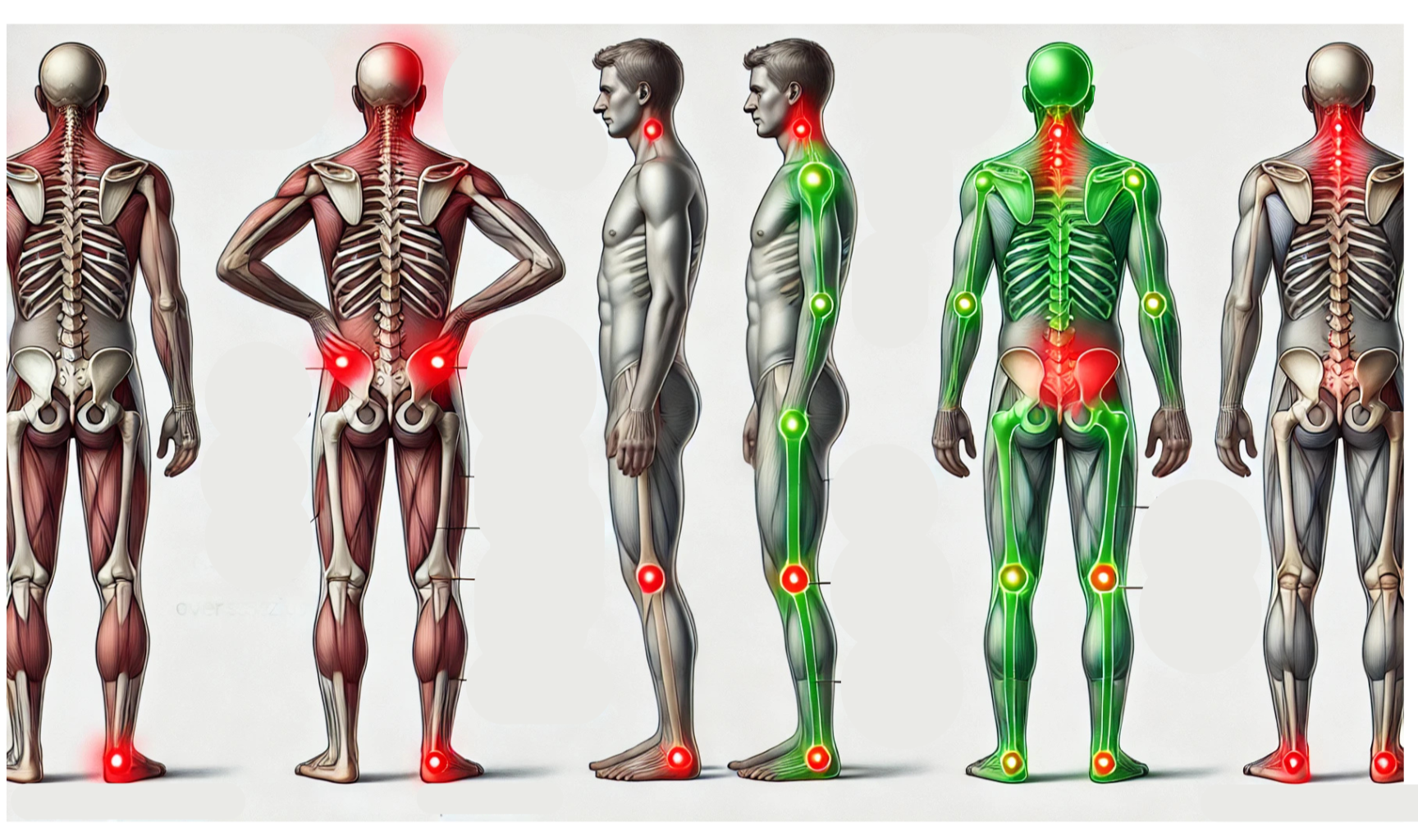
Gravity is an unrelenting force, constantly pulling on all our bodies. Over time, it can pull things out of alignment which creates a drag on the entire system, causing quicker energy depletion, fatigue, and a decline in overall well-being and even adding to brain fog. Posture slumps with shoulders rounding, spine curving, neck fixing forward which happens easily when we’re relaxing on the couch and especially when not paying attention.
Posture Pitfalls: Brought On By Modern Living
If you’re not actively combating bad posture, modern living is likely affecting you—80% of people experience back pain in their lives, with a quarter dealing with it right now.
Sitting-Related Issues: Prolonged sitting tightens hip flexors, causing anterior pelvic tilt, which disengages glutes and abs, compresses the lower back, and elongates the hamstrings. Crossing legs exacerbates this, tilting the pelvis and raising blood pressure.
Device-Related Issues: Phones and laptops cause forward head posture, rounding shoulders and restricting airways, which reduces oxygen and leads to brain fog. Shallow breathing from low core engagement and rounded posture further saps energy.
Foot-Related Issues: Over-supportive shoes weaken feet, causing overpronation (inward rolling) or supination (outward rolling), which ripples up to stress knees, hips, and even the jaw, potentially contributing to sciatica. Heel-heavy balance disengages the core, compressing the lower back, as I learned in ballet. Standing on one leg also creates long-term misalignment.
Still healing from a prior injury where it just wasn’t the same afterwards.
When stacked, you feel taller, lighter, and more energized.
Postural awareness is a practice that pays unbelievable dividends decades down the line supporting independence, mobility, and strength. By bringing awareness to your posture and creating an on-going practice of working to improve it, you work to fix imbalances before they turn into chronic pain. Misalignment in the physical body creates barriers to energy, clarity, and overall well-being, creating that “slow-burn” inflammation which can become a chronic, draining state that worsens over time.
Through better body alignment, tension is released from muscles and tendons that are over-compensating and asking for help by sending signals of pain and discomfort to your brain. Prioritizing the right posture cues works to promote body awareness, mind-muscle connection, and increasing your recovery through increased lung capacity.
Did you know that a deeper breath brings more oxygen, energy, recovery, and vitality to your system?
Increased oxygenation is key to healing pervasive pain and inflammation from past injuries and is also works in maintaining metabolic age. On the contrary, slouched posture reduces lung capacity by up to 30%, leading to shallow breaths that starve cells of oxygen which accelerate fatigue and makes healing take longer. Aligning your spine opens your chest for deeper breaths.
Better posture works to relieve pain, with bones stacked properly allowing shoulder tension to dissolve, creating space in the lower back, and even relieving sciatic nerve pain. Additionally, bringing awareness to your posture can cultivate a mindful and grounded presence in the body which can promote feelings of safety, calm and peace.
What Excellent Posture Looks And Feels Like
Standing Posture:
Imagine a string lifting you from the top of your head; ears align over shoulders, chin parallel to the floor.
Relax your shoulders back and down, countering hunching from device use.
Engage your core connecting your ribs and hips, pulling the navel toward the spine, engage the lower abs first then the upper four to support the spine.
Distribute weight evenly between both feet (shoulder-width apart), balancing from toes to heels; avoid locking knees
Sitting Posture:
Sit upright maintaining natural spinal curves and keeping core engaged and shoulders back and down (use a lumbar support if needed).
Keep feet flat on the floor, knees at a 90-degree angle, thighs parallel to the floor; avoid crossing legs to prevent pelvic tilt.
Position elbows at 90-120 degrees and screens at eye level to avoid neck strain.
My hope is that when you read this or remind yourself of it, you also unconsciously take a psych or a yawn and let the nervous system reset. What’s going on here….
Mental Cues for Excellent Posture:
“Neck Relaxed, head held by string, chin level with ground”
“Ears and shoulders in one line”
“Shoulders up and let drop, roll down and back, chest open, breathe”
“Breath into your belly, engage your lower abs, feel the lower back get supported”
“Breathe with your chest open and let your ribs drop connecting your ribcage and hips”
“Your abs are engaged and you spine is tall, head high”
“Glutes, quads, hamstrings, calves are evenly engaged”
“Weight evenly distributed in a tripod between heal, big toe, and pinky toe.”
Habits
Sitting: Feet flat on the ground, knees at 90 degrees, crossing legs makes your heart work in overtime. Stand or stretch every 30 minutes. It’s easy to hunch over when sitting, try keeping your neck straight up.
Standing: Weight evenly distributed between both feet with knees tracking over toes, core engaged, shoulders and chest open, head held high. If standing on one foot work to do so without moving the hips.
Phone Use: Looking at anything below eye-level is going to create neck strain.
Exercises for Supporting Posture and Balance
Stand against a wall (heels, glutes, upper back, head touching) What did you tweak to get there?
weight even between both feet, feeling both tripods (heel, big toe, pinky), core engaged (pulling up and in, not out), ribs down, shoulders relaxed, neck talk, head held high, spine is long.
Hold you balance on one foot for 60 seconds. Where’s your balance—over the big toe or in the heels? Try shifting your weight slightly forward, feeling your core engage, do you feel the space in your lower back?
Strengthening Exercise Examples
Plank: Hold a straight line for 20-30 seconds to fire up your core which is the backbone of posture.
Dips: Use chair or bench—pull elbows back, squeezing shoulder blades to fight slouching.
Glute Bridges: Laying on the ground with knees bend, lift hips squeezing glutes to build strength, stabilize the hips and pelvis, and support your spine.
Heel Lifts: Do 20 heel lifts going onto your toes on both feet, then work to one foot, as an added challenge try jumping on two feet then on one foot.
Push-Ups: Whether on the knees or the wall, push-ups work to open your chest and engage the entire upper body.
Lunges & Squats: Bending the lower body options to do it slowly or jumping.
Mobility Exercise Examples:
Hip Circles: Arch and round your back for spinal fluidity and mobility.
Hip Flexor Stretch: Lunge, tuck your pelvis, stretch the front of your hip.
Chest Opener: In a doorway, arms at 90 degrees, lean forward to open your chest, countering rounded shoulders.
Head Circles: Let your head go heavy slowly do circles letting you head rest in every position.